Posts

Sister Mary Aquinas Freehill, V.H.M.

Image
Pictured (left to right): Sr. M. Loretto, Sr. M. Aquinas, and Mother M. Pauline. By Father Scott Archer May 12, 2022 Eulalia Rose Freehill was born in Strawn, Illinois on March 7, 1906, the daughter of James Francis Freehill and Mary Ryan. She was Baptized by Father James Francis at the rectory of St. John the Baptist Parish in Fairbury, Illinois on March 10, 1906. Her sponsors were Austin and Mary McGreal. She received her first Communion at St. Rose in Strawn, 1913, and was Confirmed at St. Rose on September 23, 1917, by Bishop Edmund Dunne, Bishop of Peoria. Eulalia spent her youth on the family farm in Strawn with her parents, brothers, and sisters. She brought many happy memories with her when she journeyed off to attend the boarding school run by the Visitation nuns in Rock Island, Illinois. While still a high school junior at the monastery school, she entered the postulancy of the Congregation of the Visitation of Holy Mary at the Villa de Chantal in Rock Island on June 8, 1...

Saint Stephen

Image
  By Father Scott Archer December 26, 2021 The prose interlude of T.S. Eliot’s verse drama, Murder in the Cathedral , is a homily given by the character Saint Thomas Becket on Christmas day, 1170, four days before his martyrdom. He preaches, “Not only do we at the feast of Christmas celebrate at once Our Lord’s Birth and His Death, but on the next day we celebrate the martyrdom of His first martyr, the blessed Stephen. Is it an accident, do you think, that the day of the first martyr follows immediately the day of the Birth of Christ? By no means. Just as we rejoice and mourn at once, in the Birth and Passion of Our Lord; so also, in a smaller figure, we both rejoice and mourn in the death of martyrs. We mourn, for the sins of the world that has martyred them; we rejoice, that another soul is numbered among the Saints in Heaven, for the glory of God and for the salvation of men.” In the Mass of Christmas, we have the crib, the cross, and the crown united in one unique celebrati...

Independence Day

Image
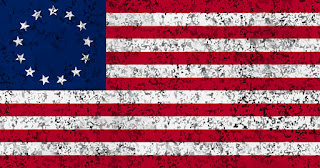
By Father Scott Archer July 4, 2021 “I have compassion on the multitude” (Mark 8:2). Loyalty, freedom, revolution, and patriotism were just some of the moral issues facing our forefathers during the conflicts leading to the Declaration of Independence. These were issues which tore families and communities apart. Benjamin Franklin's own son, William, was a Loyalist and the royal governor of New Jersey, causing his father to disinherit him. In my own family, there were both Loyalists and Patriots. My fifth great-grandfather, Isaac Cornwell, was a Patriot and served in Captain Butler's Company of Major Sheldon's Light Horse Regiment during the Revolutionary War. His brother, Captain Jacob Cornwell, was a Loyalist. Jacob took refuge in Canada and was granted 350 acres in Nova Scotia by the Crown. The two brothers never saw each other again. The central question is the morality of rebellion against one's rightful sovereign. Catholicism teaches the need of remaining obedi...

Msgr. Richard Soseman

Image
By Father Scott Archer December 23, 2020 Cathedral of St. Mary, Peoria, Illinois Saint John Vianney said, “The priest is not a priest for himself; he does not give himself absolution; he does not administer the Sacraments to himself. He is not for himself; he is for you. After God, the priest is everything.” These words from the patron saint of parish priests were at the core of what made Monsignor Soseman the priest he was; that is, a priest not for himself but for others and grounded in the knowledge that he was forever configured to the eternal priesthood of Jesus Christ. I met Richard when I was studying theology at Mount St. Mary’s Seminary and he entered as a pre-theologian. I was struck by his intelligence, kindness, and generosity. He was incredibly resolute in his desire to be a priest, and to my knowledge, he never doubted his vocation. With his approaching ordination, Richard asked me to preach his first Mass, which I gladly accepted, and with his death, I was humbled to l...

The Catholic Origins of Halloween

Image
Compiled by Father Scott Archer  October 27, 2020 Catholics often ask about the propriety of celebrating Halloween. The truth is that the origins of Halloween are rooted in the theology, liturgy, and popular customs of Catholics. It is said that the ancient Celts celebrated a major feast on October 31 and that Halloween’s origins lie in this pagan practice. However, the Celts celebrated a festival on the last day of almost every month – there was nothing particularly special about the last day of October. The word Halloween is a contraction of the name for the Vigil of All Hallows Eve; that is, Hallow-E’en. It falls on October 31 not to appease Celtic pagans but because the Feast of All Saints (All Hallows) falls on November 1. The feast of All Saints was originally celebrated on May 13, but Pope Gregory III, in 731, moved it to November 1, the dedication day of All Saints Chapel in St. Peter's in Rome. This feast spread throughout the world. In 998, St. Odilo, the abbot of Cluny...

Christ the King

Image
By Father Scott Archer  October 25, 2020 “My kingdom is not of this world” (John 18: 36). We love God because He first loved us, and our love of neighbor is based in our love of Him, enabling us to do extraordinary things for God. This is what makes our love of neighbor meritorious and true charity. Christ showed the depths of His love by giving His life on the throne of His cross for our redemption. By shedding His blood, He saved us from the power of sin and death; that is, the power sin has over us and the eternal death of hell. In His death Christ showed us the path to sacrificial love. This type of love has caused many to give up their lives, as in the case of the holy martyrs of the Church. A martyr is one who is killed for the faith and who willingly dies for Christ and the Catholic faith. Saint Catherine of Siena states, “The martyrs desired death, not to fly labor, but to attain their end. And why did they not fear death, from which man so naturally shrinks? Because ...

Fatima

Image
  Review by Father Scott Archer August 29, 2020 Directed by Marco Pontecorvo, Fatima is a fictionalized retelling of real-life Lucia de Santos and her two younger cousins, Jacinta and Francisco Marto, who received visions of the Blessed Virgin Mary between May 13 and October 13, 1917. The story unfolds via several flashbacks as Professor Nichols (Harvey Keitel) interviews Sister Lucia (Sônia Braga) in 1989 in the Carmel of Coimbra as he conducts final research for a book. Thankfully, these scenes are few as they distract from the keen depiction of the children’s experiences in Fatima, Portugal in 1917. Through the apparitions, Our Lady gives the children messages for the people, secrets for the children, themselves, visions, and the climactic Miracle of the Sun, which was witnessed by 70,000 people. Fatima depicts the events faithfully with little in the way of artistic license. Fortunately, this means fictionalized melodrama is not part of the story. Unfortunately, what shou...